
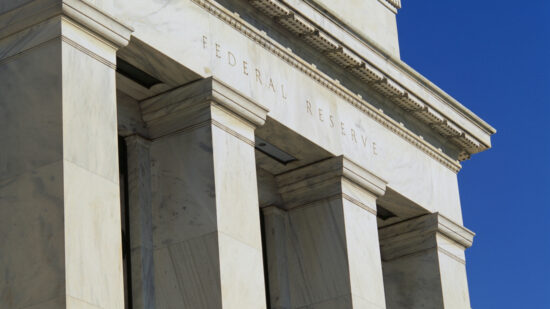
As the fintech landscape evolves, federal banking regulators are taking decisive steps to integrate stablecoins and payments innovations into the traditional banking system.
By Arthur S. Long, Parag Patel, Pia Naib, and Deric Behar
Key Points:
- The FDIC plans to propose an application process for stablecoin issuance by FDIC-regulated institutions by the end of 2025, and is also collaborating with other banking regulators to develop broader prudential standards for all stablecoin issuers as required under the GENIUS Act.
- The Federal Reserve aims to establish “skinny” master accounts for eligible depository institutions (without overdrafts, interest, or discount window access) to expand payments competition and reduce costs.
Introduction
On November 13, 2025, at the Federal Reserve Bank of Philadelphia’s Ninth Annual Fintech Conference, Federal Deposit Insurance Corporation (FDIC) Acting Chairman Travis Hill and Governor Christopher Waller of the Board of Governors of the Federal Reserve System (Federal Reserve Board or FRB) outlined the banking regulators’ plans for integrating stablecoins and fintech innovations into the traditional banking system.
FDIC Proposal for Stablecoin Issuers
As part of the FDIC’s responsibilities under the GENIUS Act, enacted in July 2025 (see this Latham Client Alert), Acting Chairman Hill confirmed that the FDIC is preparing to publish a proposed stablecoin licensing regime by the end of the year. The GENIUS Act established oversight and licensing responsibilities for various regulators, including the FDIC.1 Although the Office of the Comptroller of the Currency (OCC) is likely to lead much of the issuer licensing under the GENIUS Act, the FDIC’s remit includes stablecoin-issuing subsidiaries of FDIC-regulated institutions, as well as oversight responsibilities around reserve composition, misrepresentation of federal deposit insurance coverage, and participation in the interagency Stablecoin Certification Review Committee.2
In collaboration with the FRB and the OCC, the FDIC is also preparing prudential standards for potential FDIC-supervised stablecoin issuers, addressing capital requirements, reserve requirements, and risk management (e.g., liquidity and interest rate risk management, operational and cybersecurity risk management, and compliance with anti-money laundering rules).
FRB Proposal for “Skinny” Master Accounts
FRB Governor Waller described the central bank’s efforts to operationalize specialized “skinny” master accounts, which would allow fintechs that qualify as eligible depository institutions to access the central bank’s payment systems. The “skinny” master accounts are intended to expand competition in the payments space by providing fintechs with the ability to participate in the payment system in a meaningful but limited way, promoting competition and efficiency, and allowing for FRB oversight. As such, the accounts would not allow overdrafts or earn interest, and certain Federal Reserve services (such as “discount window” emergency loans) would be restricted.
Governor Waller first introduced this idea in a speech at the Payments Innovation Conference on October 21, 2025. In that speech, Governor Waller noted that “distributed ledgers and crypto-assets are no longer on the fringes but increasingly are woven into the fabric of the payment and financial systems.” He noted that the Federal Reserve “can and should do more to support those actively transforming the payment system” and should “acknowledge and embrace private-sector innovation that can improve the payment system while preserving its safety and stability, which are as essential to the new generation of innovators as they are to legacy institutions.”
The FRB’s goal is to have “skinny” master accounts available by the fourth quarter of 2026. In the near term, it plans to issue a request for public comment while simultaneously developing the necessary technical infrastructure to make “skinny” master accounts available to “legally eligible institutions that right now conduct payment services primarily through a third-party bank that has a full-fledged master account.”
Balancing Innovation With Risk Management
One of the key challenges facing regulators is the potential for stablecoins and other payment innovations to disrupt the traditional banking system. Traditional banking advocates have expressed concerns that stablecoins, especially if offered with yield by third parties or affiliates of issuers, could create a mass exit of deposits from smaller banks and the banking system as a whole. According to Acting Chair Hill, the FDIC is closely monitoring these concerns and is committed to ensuring that the integration of stablecoins does not undermine the stability of the banking sector.
Likewise, the introduction of “skinny” master accounts represents a proactive approach by the Federal Reserve to balance support for payments innovation, competition, and lower costs with concerns for financial system safety and stability. According to Governor Waller, “[t]he account would provide access to the Federal Reserve payment rails while controlling for various risks to the Federal Reserve and the payment system.”
The efforts by the FDIC and the Federal Reserve as previewed by Acting Chairman Hill and Governor Waller reflect the efforts of federal banking regulators in the current administration to support the integration of digital assets and fintech innovation into the traditional banking system while maintaining necessary prudential oversight.